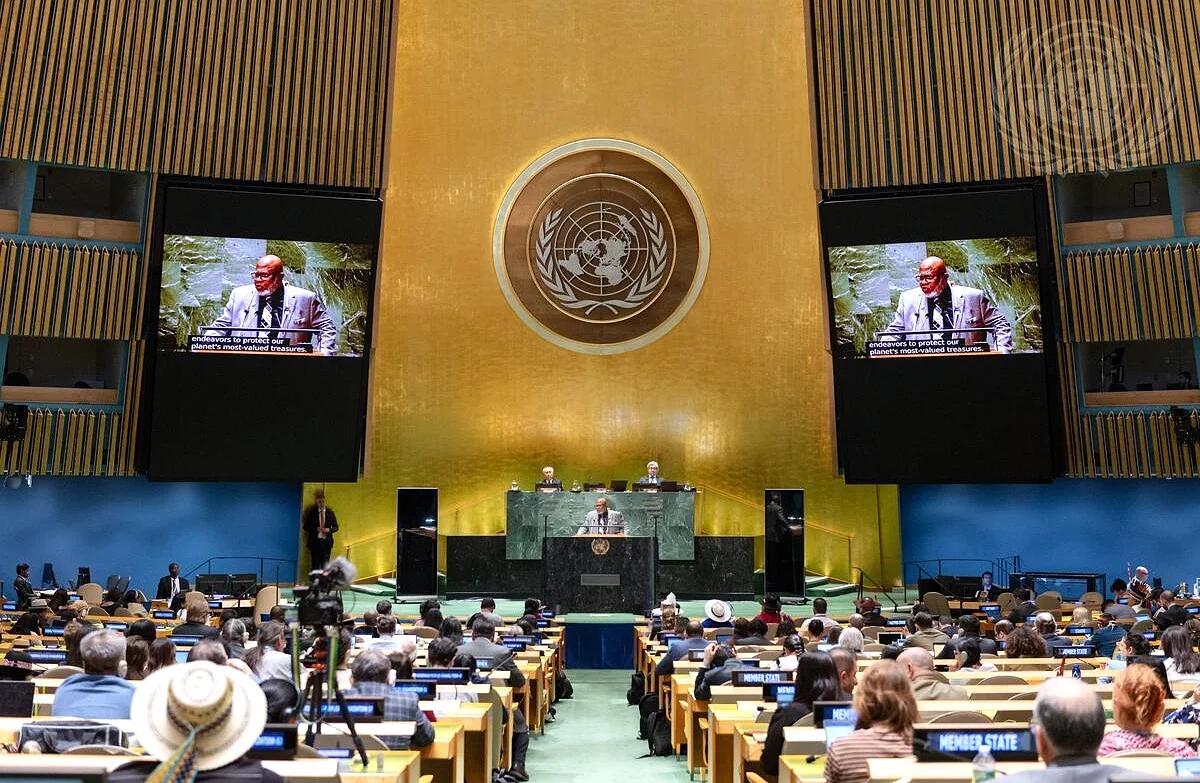
The United Nations Permanent Forum on Indigenous Issues (UNPFII) serves as an advisory body to the UN Economic and Social Council (ECOSOC), providing a central platform to address human rights, health, education, the environment, and social development for Indigenous Peoples globally.
Recent Updates and Key Developments
1. 25th Annual Session (April 20 – May 1, 2026)
- Main Theme: The 25th Session of the UNPFII focused on "Ensuring Indigenous Peoples' health, including in the context of conflict."
- Key Focus Areas: Discussions centered heavily on the compounding impacts of global conflicts, territorial encroachment, and environmental degradation on the physical and mental health of Indigenous communities.
- Side Events & Media Zone: Side events highlighted escalating threats against Indigenous land and environmental defenders, with a focus on criminalization and violence targeting Indigenous women. The Secretariat and civil society partners also organized the Indigenous Media Zone to allow journalists and platforms to report on proceedings using Indigenous worldviews and languages, in alignment with the ongoing International Decade of Indigenous Languages (2022–2032).
2. Institutional Challenges: Budget & Travel Constraints
- Impact of UN Funding Shortfalls: Broader financial crises within the United Nations system—exacerbated by unpaid dues from major member states—severely impacted the operations of the Permanent Forum in 2026.
- Reduced Regional Consultations: Financial cutbacks led to the scaling back of planned in-person regional consultations across the seven socio-cultural regions. These consultations were intended to inform global plans of action on Indigenous health and self-determination.
- Travel Assistance & Reporting: Reductions in funding limited travel grants for Indigenous delegates from remote areas, and forced tighter page limits on official UN outcome reports.
3. Core Priorities & Future Work
- Protection of Defenders: Civil society groups and members of the UN Expert Mechanism on the Rights of Indigenous Peoples (EMRIP) highlighted the critical need for community-led protection strategies for Indigenous defenders facing threats from extractive industries and land seizures.
- Permanent Mandate: Delegates reaffirmed the importance of the UNPFII's mandate, emphasizing that its permanent structure ensures a continuous platform within the UN system that does not require annual mandate renewals.
Special Rapporteur's Report at the 25th Session
During the 25th Session of the UNPFII in New York, the UN Special Rapporteur on the rights of Indigenous Peoples, Dr. Albert K. Barume, delivered a comprehensive address and progress update framing his mandate's latest work against escalating global threats. Aligning with the session’s primary theme—Indigenous health in the context of conflict—he emphasized that health cannot be viewed solely as access to medical care, but as a holistic right encompassing dignity, peace, cultural continuity, and self-determination over ancestral lands. He raised critical concerns over a modern geopolitical climate where international human rights standards are increasingly disregarded or actively resisted, highlighting how land grabbing, extractive projects, and violent conflict severely undermine the physical and mental well-being of Indigenous communities worldwide.
In detailing his mandate's activities, Dr. Barume outlined ongoing thematic research into the demarcation, registration, and titling of Indigenous lands, as well as an upcoming report examining historical and contemporary violations of the sexual and reproductive health and rights of Indigenous women and girls. He stressed that state recognition must go beyond symbolic gestures to include formal legal status, territorial guarantees, and genuine institutional partnerships aligned with the UN Declaration on the Rights of Indigenous Peoples (UNDRIP). Concluding his presentation, he called on UN member states to immediately review their relationships with Indigenous Peoples to establish meaningful reconciliation framework mechanisms while defending the progress made over the mandate’s 25-year history.
References
- Cultural Survival (April 2026). The 25th Session of the UN Permanent Forum on Indigenous Issues Starts April 20!
- https://www.culturalsurvival.org/news/25th-session-un-permanent-forum-indigenous-issues-starts-april-20
- IndigiNews / ICT (April 2026). UN Indigenous Peoples forum impacted by ongoing funding crisis.
- https://indiginews.com/news/united-nations-indigenous-peoples-forum-funding-crisis/
- Global Coalition for the UN Declaration on the Rights of Indigenous Peoples (May 2026). 25th Session of the United Nations Permanent Forum on Indigenous Issues: Agenda Item 6 (Future Work).
- https://www.declarationcoalition.com/2026/05/01/25th-session-of-the-united-nations-permanent-forum-on-indigenous-issues-agenda-item-6-future-work/
- Native American Rights Fund (NARF) & Colorado Law (2026). UN Permanent Forum on Indigenous Issues 2026 Registration & Information.
- https://un-declaration.narf.org/unpfii2026-registration/
- Barume, Albert K. (May 1, 2026). Statement by the UN Special Rapporteur on the rights of Indigenous Peoples at the 25th Session of the UNPFII. Debates Indígenas.
- https://debatesindigenas.org/en/2026/05/01/statement-by-the-un-special-rapporteur-on-the-rights-of-indigenous-peoples/
- UN Office of the High Commissioner for Human Rights (OHCHR) (2026). Mandate Activities & Reports: Special Rapporteur on the rights of Indigenous Peoples.
- https://www.ohchr.org/en/special-procedures/sr-indigenous-peoples